AI Product Development
BUILD · PRODUCTION AI

AI Product
Development

Build AI-powered products and features from LLM and RAG applications to AI agents and multimodal experiences — engineered for production.

17+
Years in business
100%
Swiss owned
40+
Long-term clients
650+
Employees
80+
Dedicated teams

Axon Active provides AI product development services that turn AI opportunities into production-ready products and features — from LLM and RAG applications to AI agents, multimodal document intelligence, and enterprise AI workflows. We combine AI capabilities with experienced software engineers, evaluation, observability, and production controls to build AI that works reliably in real-world use.

What we ship

AI development services

Our AI development services cover LLM applications, AI agents, enterprise AI workflows, and multimodal AI — engineered with evaluation, grounding, observability, and production controls built in.

LLM Integration

Our LLM integration services connect large language models to your product — from AI assistants and semantic search to tool calling. We combine model integration with structured prompts, evaluation, and observability so teams can measure quality and improve it in production.

LLM Integration

Agentic AI & AI agent development

Agentic AI development covers AI agents that plan and execute multi-step tasks, use tools, and coordinate actions across your systems. We design bounded workflows with evaluation, observability, and human oversight where decisions or outcomes carry higher risk.

Agentic AI & AI agent development

Enterprise AI Workflows

Our enterprise AI workflows embed AI into the systems you already run — including CRM, ERP, ticketing, and internal platforms — to automate processes, support decisions, and extract information from documents and other business data.

Enterprise AI Workflows

Multimodal AI

Multimodal AI combines language, vision, documents, images, and video to support richer product experiences — including document intelligence, OCR-assisted workflows, and real-time image and video analysis.

Multimodal AI
Use cases

Where AI product development delivers value

Whether you’re embedding AI into a customer-facing product or improving an internal workflow, we build production AI around the business problem, the data available, and the outcome you need to improve.

Banking

KYC automation, fraud detection, conversational AI, and intelligent customer-service workflows.

Fintech

Risk scoring, payments intelligence, fraud and regulatory workflows, and AI-assisted decision support.

Insurance

Claims processing, underwriting support, document intelligence, and workflow automation.

Healthcare

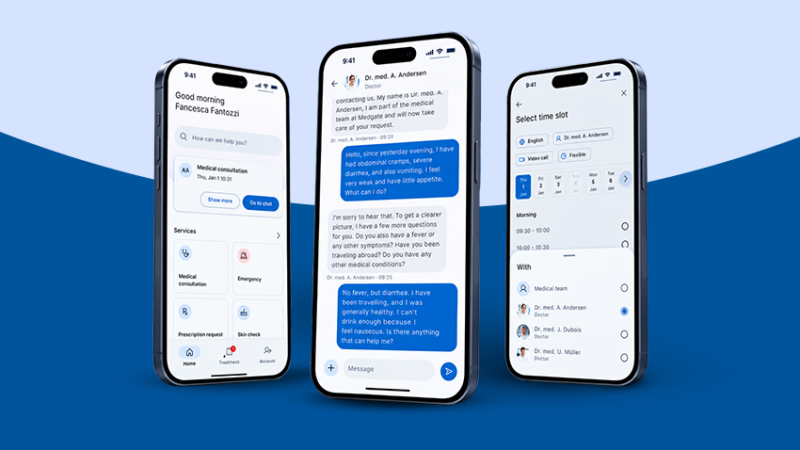
Clinical documentation, patient-facing AI assistants, triage workflows, and decision support.

Logistics

Route optimization, demand forecasting, anomaly detection, and operational decision support.

And beyond

From forecasting and personalization to AI MVPs, we adapt the same production engineering approach to new products, workflows, and business models.

Hai Dang Da Nang branch director at Axon Active

Hai Dang

Branch Director · Axon Active
For years, our ideas were often limited by constraints — skills we didn't have yet, tools we couldn't access, or time we couldn't spare. Today, AI removes those barriers.
Embed, don’t replace

AI integration services — embed AI into products and workflows you already run

Not every AI engagement starts with a new product. Our AI integration services embed capabilities such as assistants, document intelligence, search, and workflow automation into the CRM, ERP, ticketing, and internal platforms you already use.

These engagements start with a focused use case and expand as the value is proven. We combine the model, retrieval or other AI capability, application integration, evaluation, and monitoring around your specific workflow — so the result strengthens the product or process rather than becoming a standalone experiment.

AI integration services — embed AI into what you already run
How it ships

How we engineer AI features for production

Building AI into a product requires more than connecting a model. We define how the feature should perform, ground it in the right data, test it against measurable criteria, and monitor it after launch. Product owners and engineers agree on acceptance criteria before implementation, and AI feature changes are evaluated and released with the controls needed for production software.

Eval design + acceptance criteria

We define measurable success criteria and evaluation sets before implementation. Product owners and lead engineers confirm what good output looks like and which failure cases must be caught before release.

Product owner + lead engineer confirm the eval scope before implementation begins.

RAG pipeline implementation

Retrieval, chunking, and embedding pipelines are designed around documented data sources and contracts. Engineers own the architecture and validate retrieval quality, grounding, and source coverage before release.

Senior engineer reviews retrieval architecture; data owners validate approved sources.

Prompt engineering + versioning

Structured prompts are version-controlled, tested, and released deliberately. Changes are evaluated against defined criteria before they reach production, with product and engineering ownership clearly assigned.

Prompt changes are reviewed and approved alongside the product release.

RAG retrieval quality testing

Retrieval quality is measured against the evaluation set using metrics such as recall, citation accuracy, and grounded-answer quality. Regressions are identified before they reach production.

Data and product owners agree retrieval-quality thresholds before release.

LLM observability + drift detection

We monitor latency, model usage, cost, and output quality after launch. Drift and unexpected changes in behavior are surfaced early so the team can investigate before they become production issues.

Engineering monitors drift and escalates regressions to the product owner.

Hallucination + safety monitoring

Production controls can include content moderation, jailbreak detection, PII protection, and monitoring for unreliable outputs. Higher-risk incidents remain subject to human review and controlled rollback.

High-risk incidents remain subject to human review and controlled rollback.

AI-AUGMENTED DELIVERY

The delivery method behind every AI product

Every engagement runs on AI-augmented delivery — combining production-grade AI tools and custom agents with defined governance and human oversight. AI accelerates execution across the SDLC, while experienced engineers remain accountable for architecture, quality, security, and production outcomes.

Building AI products is one thing; operationalizing their delivery reliably is another.

See our approach
Where we deliver

Where production AI gets built

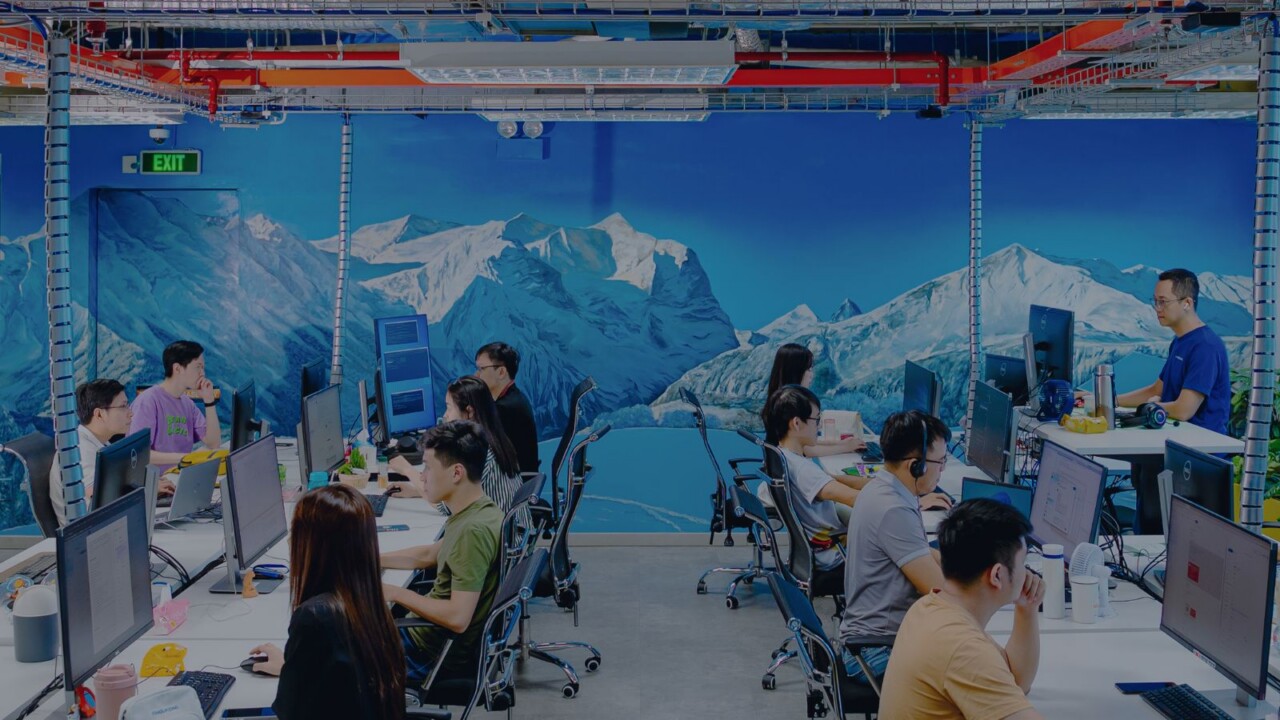
Our AI product teams work across four Vietnam delivery centers — Ho Chi Minh City - Tan Son Nhat, Ho Chi Minh City - Thu Duc, Da Nang, and Can Tho. More than 650 engineers across 80+ production squads build and operate software for 40+ long-term clients, bringing the engineering scale, domain context, and delivery experience needed to take AI from prototype to production.

AI Software Development at Axon Active — Where production AI gets built
Team Sprint planning with an AI squad at the Ho Chi Minh City office
AI Software Development at Axon Active — Where production AI gets built
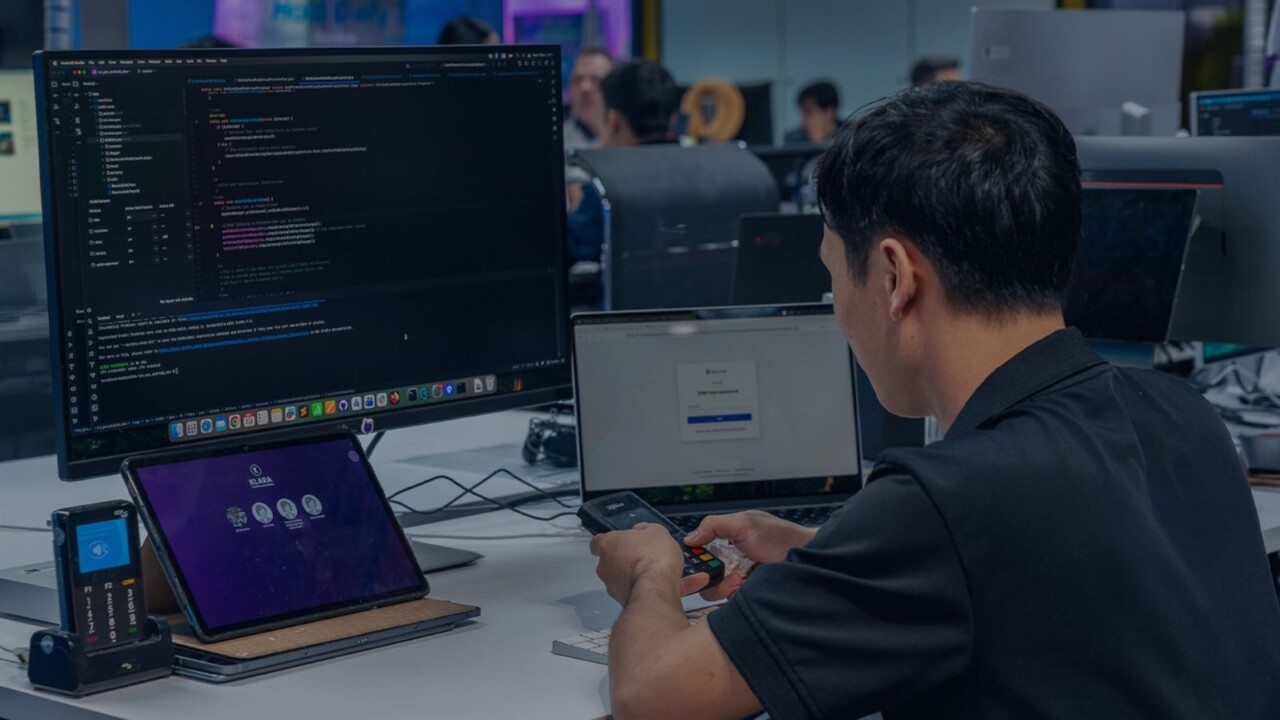
Engineers developing AI-powered software solutions at Axon Active
Mobile payment platform development with full-stack engineering using Angular and Spring Boot
Inside Axon Active's Ho Chi Minh City development center
Build vs Advisory

AI product development vs AI consulting

Two paths for turning an AI opportunity into value. The right choice depends on whether you need a team to build and ship or guidance to define what to build first.

AI Product Development

Axon Active

  • You have a specific AI use case or product opportunity
  • You want an AI capability or product built and shipped to production
  • You need experienced AI and software engineers to execute
  • You want ongoing engineering support as the product evolves

AI Consulting

Advisory

  • You’re still evaluating where AI can create value
  • You need help prioritizing use cases or shaping an AI roadmap
  • You have the engineering capacity to execute internally
  • You need a bounded advisory engagement
AI GOVERNANCE

AI with governance built into every product

AI products are developed with governance considered from the start — including data privacy and IP protection, evaluation and monitoring, human oversight, and controls appropriate to the use case and risk. Our engagements align with the EU AI Act (Regulation 2024/1689) — the strictest AI regulation to date — with Article 4 AI-literacy training across all teams. ISO/IEC 42001 formalization underway (certification target 2027) — the first international standard for AI management systems.

Explore AI governance
Mr. Daniel Gauch
Mr. Daniel Gauch
CTO, ePost Service AG

We are very happy with the commitment of the teams to deliver high-quality results that make our customers happy. Of course, this would not be possible without the excellent support of Axon Active.

FAQs

Frequently asked questions

What are AI product development services, and what does Axon Active deliver?

Axon Active’s AI product development services cover both building AI products from the ground up and embedding intelligent capabilities into software you already run — from LLM integrations and RAG pipelines to agentic workflows and multimodal document intelligence. Every build follows our AI-augmented delivery approach, with evals, grounding, security, and enterprise AI governance built into the development lifecycle and carried through to every production release.

What generative AI development services do you offer?

Our generative AI development services include LLM integration, retrieval-augmented generation, agentic AI, and multimodal AI — across major providers (OpenAI, Anthropic, Mistral) plus self-hosted open-source models.

What do LLM integration services actually involve?

LLM integration services connect a language model into your product: assistants, semantic search via RAG, and tool calling — with eval-driven prompt engineering and observability from day one. It’s often the fastest path to a measurable AI win.

How do you handle data privacy and IP when building AI features?

AI work amplifies data concerns — customer data flows through models that aren’t always yours. We handle this in three layers. First, IP: everything we build with you — model weights, fine-tuning datasets, prompts, evaluation sets, RAG indexes — belongs to you under the same standard assignment terms covering source code. Second, data residency: you choose where data sits. EU-only workloads stay in EU regions; sensitive data can run on private cloud or on-premise. Third, model selection: we work across providers (OpenAI, Anthropic, Mistral, plus self-hosted open-source models), so vendor data policies are a deliberate choice, not a default.

Cloud-hosted AI or on-premises — which fits our context?

Both have a place, and most engagements end up hybrid. Cloud-hosted models (OpenAI, Anthropic, Bedrock, Azure AI) give you the latest frontier capabilities with minimal ops overhead — pay-per-use, scale up instantly, no model-serving infrastructure to maintain. On-premise or private-cloud models (self-hosted Llama, Mistral, Qwen, and similar) give you full data control, predictable costs, and air-gapped deployment when regulations require it — but you take on the serving, scaling, and updating work. We typically map the decision against four factors: data sensitivity, latency requirements, scale, and your team’s MLOps capacity. For regulated industries, a common pattern is a cloud frontier model for general tasks plus self-hosted smaller models for sensitive data flows.


How do you handle hallucinations, accuracy, and reliability for AI features in production?

Hallucinations and accuracy drift are real — anyone shipping AI to production needs engineering discipline, not faith. Our approach has four layers. Evaluation: every AI feature ships with a golden dataset and automated eval suite that runs on every change, so accuracy regression is caught before deploy. Grounding: for factual queries we use RAG patterns that constrain answers to verified sources, with citations exposed to users. Guardrails: structured output schemas, input validation, and refusal patterns for out-of-scope queries. Human-in-the-loop where stakes are high: medical, legal, and financial decisions stay reviewable by people. Production monitoring tracks accuracy, latency, and cost continuously — not as a one-time launch metric. We’re also honest about scope: some use cases shouldn’t be AI-autonomous at all, and we’ll tell you that.

Where are your teams, and how does communication work?

Our delivery teams are in Vietnam ( Ho Chi Minh City, Da Nang, and Can Tho), with onsite specialists embedded at client sites. For EU clients, there’s a 4-hour daily overlap between CET afternoon and Vietnamese morning-to-midday — that’s when standups, planning, and live discussions happen. For clients in other regions (US, APAC, Middle East), we adjust the team’s working hours to maintain at least 1-2 hours of live overlap with your business day. Outside the overlap window, work is async. Working language is English, over your Slack or Teams.

How does an engagement with Axon Active start?

It starts with an initial call. We listen to what you’re building, your needs, and your expectations. We walk you through what we offer and propose a team shape, timeline, and pricing model. No deck, no sales script. If we’re not the right fit, we’ll tell you. If we are, we move to contract discussion and kick off hiring and onboarding.